When Success Looks Good but No Longer Feels Right
Imagine being offered a project you would once have said yes to before the conversation was over. It is interesting work, with people you respect. It would use your experience and give you more influence. You know you could do it well.
Then the conversation turns to the practicalities. Regular travel. Calls across time zones. A demanding first year, although nobody is quite sure when it would become less demanding. You start thinking about the week you would actually be living, and your enthusiasm becomes more complicated.
You are still interested in the work. You are less certain about the arrangement around it. That can be an uncomfortable place to find yourself, particularly when you have spent years building a career you are proud of. You might wonder whether you have become less ambitious, or whether you should simply be grateful that people still want you for these opportunities. Yet your hesitation deserves a closer look. What you want from work may have changed, even while your ability to deliver remains very much intact.
The career you wanted still matters
There were good reasons for the decisions that brought you here. A larger role may have given you financial independence, room to learn and a voice in decisions you cared about. Travel may have been part of what made the job exciting. Building a team may have been exactly the challenge you wanted.
Those reasons do not become foolish because you want something different now. You can value the career you have built and still want different conditions for its next chapter.
In midlife, that question can become more specific. Perhaps you want to use your experience on a difficult problem rather than spend another year coordinating everybody else's input. Perhaps something outside work needs more of your attention. Or perhaps you have more freedom than you used to, and would like to do something with it beyond making yourself available for another meeting.
There is no single story here. In their review of midlife development, psychologists Frank Infurna, Denis Gerstorf and Margie Lachman describe a period shaped by overlapping roles, life transitions and very different social and economic circumstances. Their work gives us a more useful starting point than the familiar crisis story: Look at the person's actual circumstances. [1]
For you, the important change might be a new caring responsibility, a desire to learn, a different relationship with your time, or a workplace that has become harder to work in. Before deciding what to do next, it helps to understand what has moved.
What has actually changed?
Having spent three decades in international corporate environments, working across product creation, strategy and transformation, I have learned to look beyond job titles. What matters is the work a role allows you to do, the decisions you can influence, and the conditions under which you are expected to deliver.
Consider what can happen after a reorganisation. Your title stays the same, but you now support more teams. Decisions take longer because ownership is less clear. The work you enjoyed has gradually been replaced by coordination. You may still deliver everything expected of you, while feeling further away from the contribution you wanted to make. In that situation, asking yourself to rediscover your enthusiasm leaves too much out. The role has changed. Naming that gives you something concrete to discuss.
The change could also be on your side. Work that once felt absorbing may no longer offer enough learning. You may want to lead a larger team, or deepen your expertise without adding another layer of management. You may enjoy the responsibility and want fewer evenings organised around it. These are different wishes, with different possible answers.
Sometimes the answer is a different role. Sometimes it is a different way of working in the role you already have. You may have spent years being the person who steps in, takes on extra responsibility or makes sure everything gets done. Those habits may have contributed enormously to your success. But are they still serving you?
Before planning your next career move, it helps to understand whether you want different work, different conditions, or a different way of approaching the work itself.
There is also the organisation around the role. How is commitment recognised? Can someone work differently and still be considered for advancement? Does flexibility exist in practice, including how the work is distributed? Your own clarity matters, but so does the room you actually have to act on it.
Development and better conditions belong in the same conversation
Deloitte's Women @ Work 2026 survey gathered responses from 7,500 women in 15 countries. Among respondents who wanted to leave their current job, 45% cited lack of career progression as a main reason. Lack of flexibility around working hours and difficulty balancing work and home life were each cited by 33%. [2]
These are survey findings across age groups, not a diagnosis of women in midlife or a representative picture of all women. They do, however, put career development and working conditions in the same conversation. My reading is that we should ask about both when discussing what a woman wants from her next career chapter.
You might want meaningful responsibility and a working week you can reasonably plan. You might want more influence and enough time to think before making decisions. You might want to keep earning well while changing the amount of travel your role requires. Being specific about those wishes gives you a better basis for a decision than asking whether you want to be more or less ambitious.
It also helps you recognise a genuine conflict. Some roles do require travel or p
articular working hours. Some organisations will not offer the conditions you need. Understanding that early lets you weigh the trade-off rather than discovering it after you have already said yes.
Make the change specific enough to discuss
Start with a real week, rather than an ideal version of your life. Look at it through three lenses:
The work: What do you enjoy doing? Where can you make a meaningful contribution? What would you gladly leave behind?
The conditions: What makes your work possible, and what makes it unnecessarily difficult? Think about travel, meetings, decision-making and the expectations around availability.
Your own patterns: Where do you automatically step in, take on more or hold yourself to expectations that may no longer serve you?
Notice what you want to keep, what you would like to change and what might be open for discussion. Then choose one condition you would like to change. “I want better balance” may describe the feeling accurately, but it gives you and your manager very little to work with. “I want to continue leading this project, with fewer overnight trips and an agreed plan for which meetings require my presence” opens a more useful discussion.
For another woman, the condition might be access to more challenging work. Her conversation could begin with the contribution she wants to make and the responsibilities she would need to hand over to make it possible. Changing the terms of success can mean asking for more of the right work.
You can prepare that conversation with a simple sentence: “I want to keep ___, change ___, and find out whether ___ is possible.”
The last part matters. It leaves space to gather information rather than requiring you to arrive with a complete solution. Be equally concrete about what you need to protect. Income, job security and responsibilities outside work are part of the decision. A useful next step may be a trial arrangement, a conversation about an internal move or a longer period of preparation. You do not owe anyone a dramatic reinvention.
A next chapter you can recognise yourself in
Return to that project offer. You may decide to accept it after clarifying the travel, agreeing priorities and understanding what support is available. You may discover that you want the challenge, but the conditions cannot work for you. Or the conversation may help you see a different opportunity worth exploring. Your past achievements tell you a lot about what you are capable of. But they don’t have to determine what you say yes to next.
I think we sometimes forget how much of ourselves we have invested in building our careers. The years of learning, taking on responsibility, making difficult decisions and proving that we can deliver. It is understandable that we don’t want to question something we have worked so hard for.
But wanting something different now doesn’t make those years any less valuable. You can be proud of the career you have built and still want its next chapter to look different. Perhaps not less ambitious. Just more suited to the person you are today and the life you want to live.
Explore what would make work fit better
Understanding what has changed is often the first step towards making work feel right again.
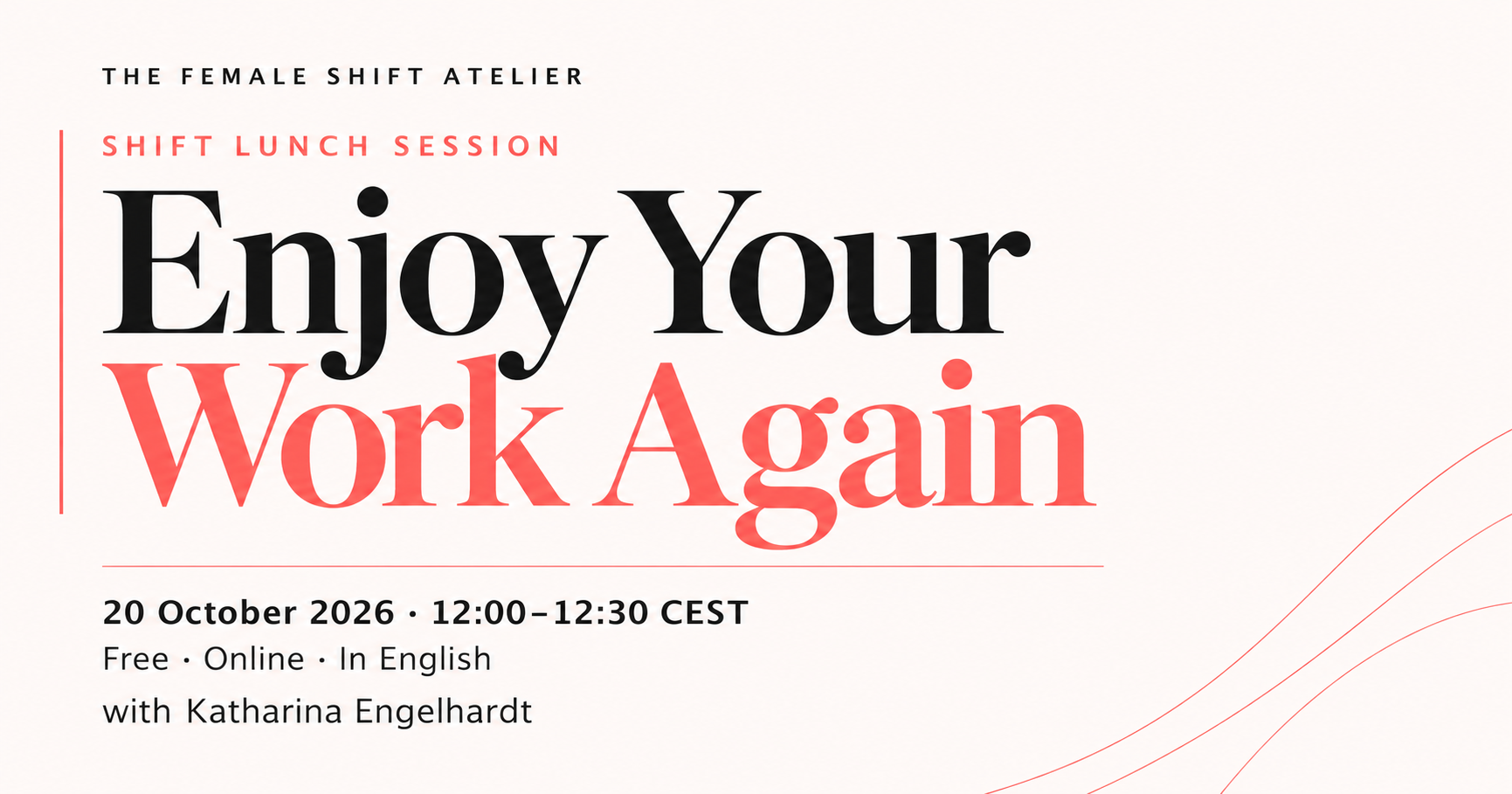
In my free SHIFT Lunch Session, Enjoy Your Work Again, on 20 October 2026, from 12:00 to 12:30 CEST, we’ll use a practical Work Fit Check to explore where your work still fits, what may have changed and one next step you can take.
Join the free SHIFT Lunch Session here
Sources:
[1] Infurna, F. J., Gerstorf, D., & Lachman, M. E. (2020). Midlife in the 2020s: Opportunities and challenges. American Psychologist, 75(4), 470–485. Research review; used for the diversity of midlife circumstances, not a universal crisis claim. Read the research summary here.
[2] Deloitte Global (2026). Women @ Work 2026: A Global Outlook. Career plans, p. 12; methodology, p. 48. Fieldwork: May–June 2026. Percentages above refer to respondents who wanted to leave their current job; answers describe stated reasons, not proven causes. Read the Deloitte report here.
Pin this graphic if you liked the post.
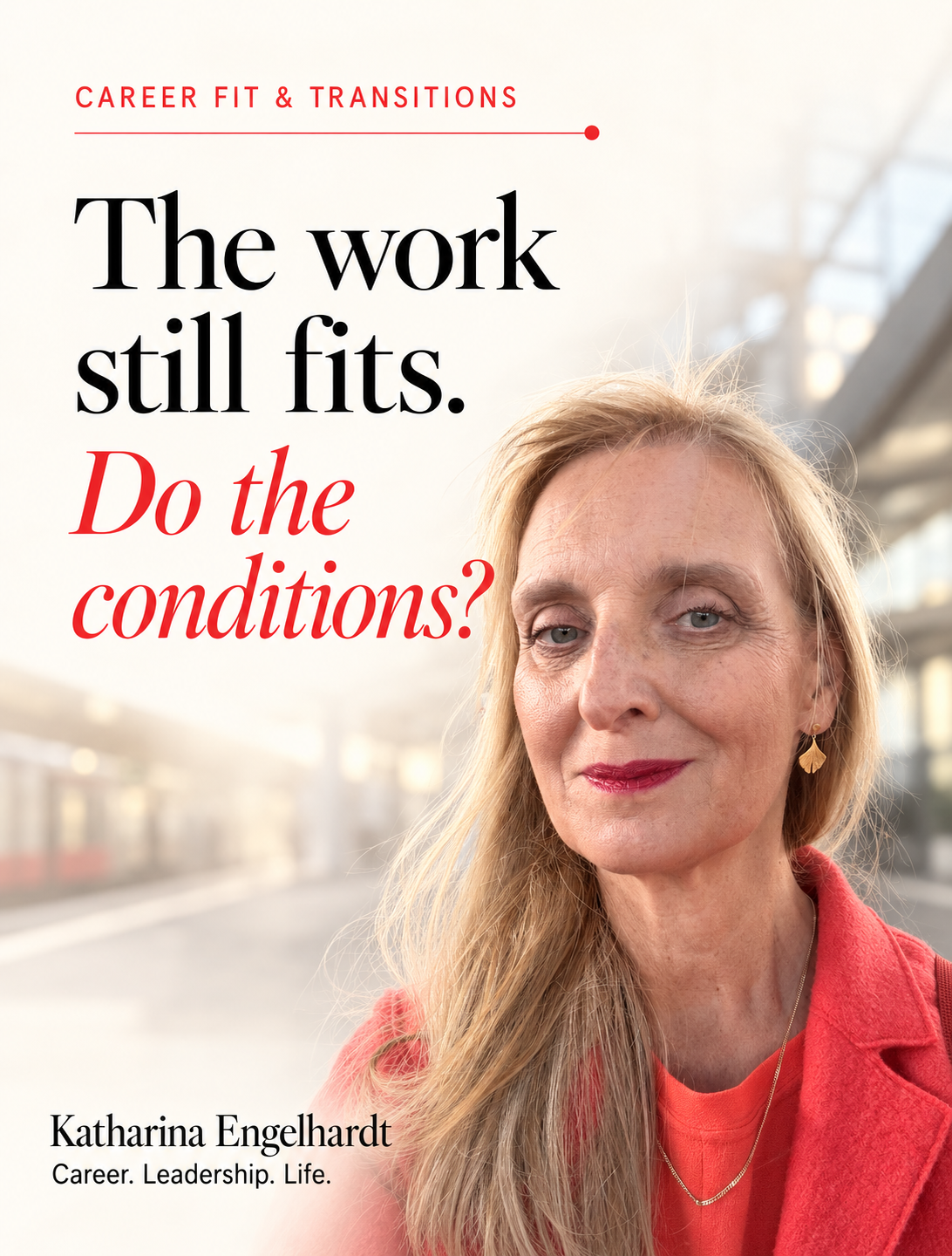
Kathrina Engelhardt shares strategic questions females in the workplace
should ask more often